
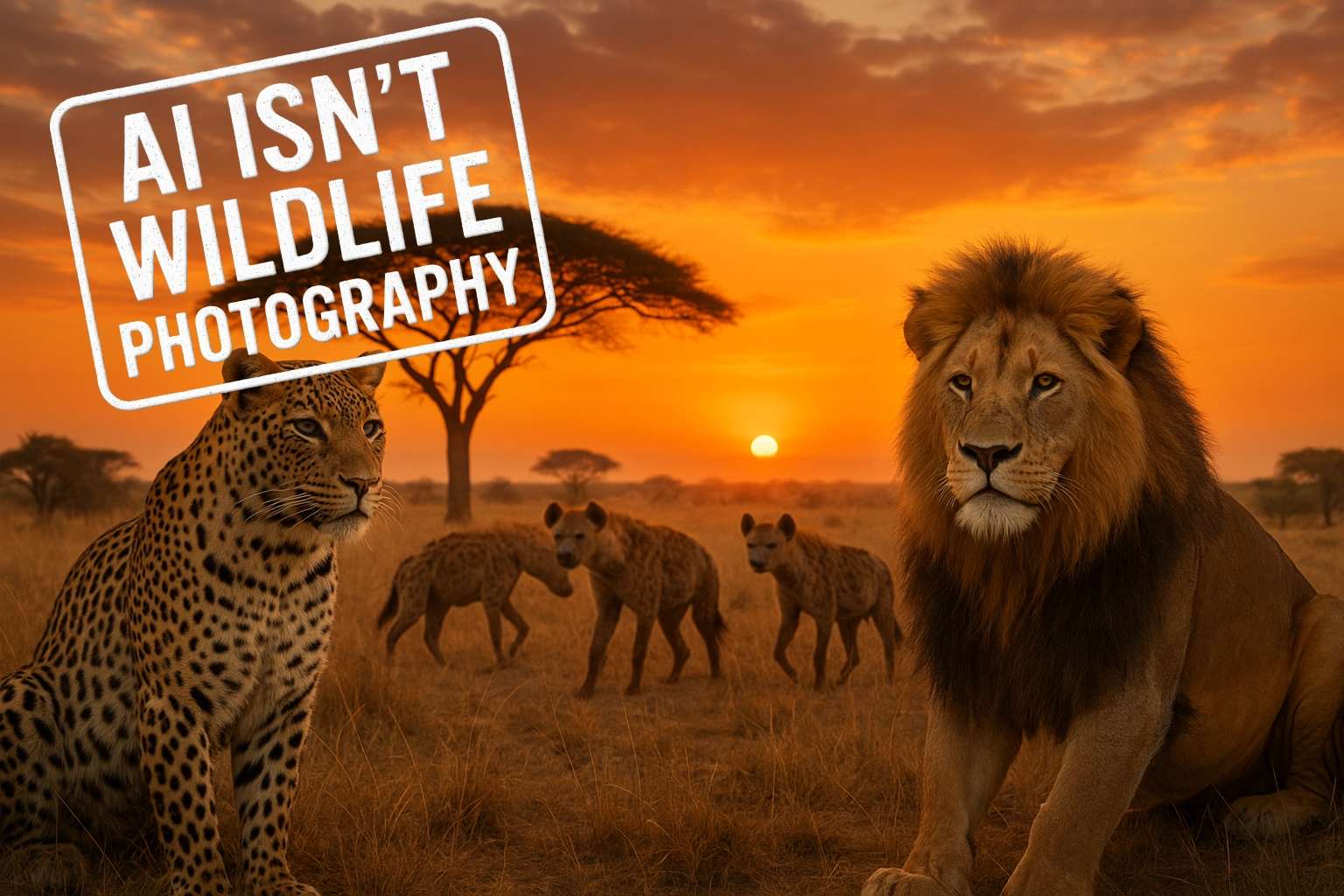
AI Isn’t Wildlife Photography
It’s a basic title, I know. Almost laughably obvious. But the fact I even need to say it tells you something about where we’ve arrived. “AI Isn’t Wildlife Photography” should go without saying! Yet scroll through social media and you’ll find endless posts of imaginary scenarios, captioned and hash-tagged as though they were real photographs or film.
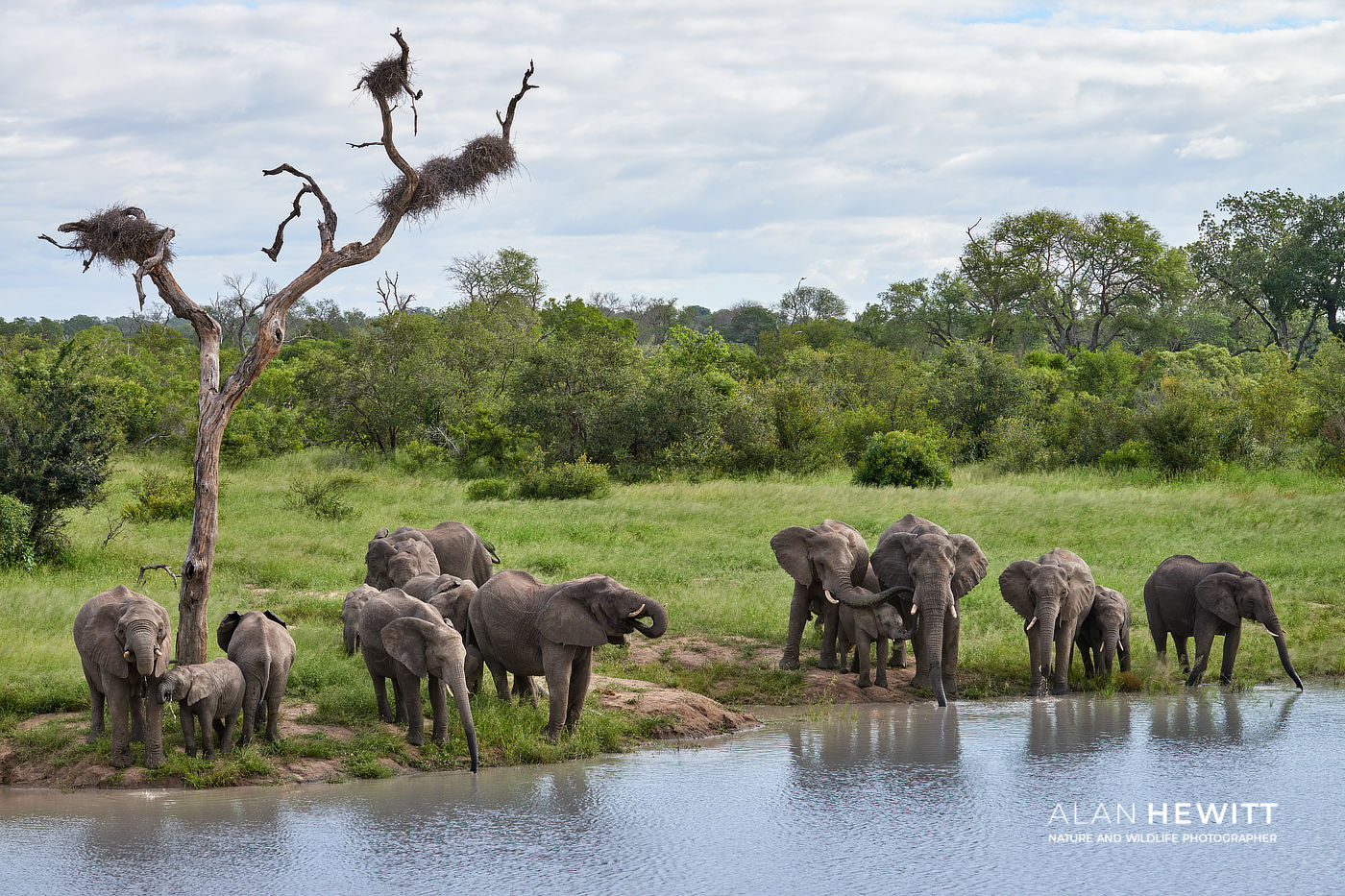
African Elephants, Sabi Sands.
From Blog Inspiration to Safari Adventure!
Kenya’s Maasai Mara Photography Safari
26th August 2027
7 or 11 nights available
Kenya’s Maasai Mara Photography Safari – The Green Season
March 2028 (TBC)
7 or 11 nights available
Supporting conservation and communities through ethical safaris. Join us on unforgettable photography safaris led by professional guides and photographers.

African Photography Safaris Ltd. is a member of Protected Trust Services, providing financial protection under UK Package Travel Regulations.
Real and witnessed in nature
I took this photograph in South Africa’s Sabi Sands reserve. We were crossing a dam when I heard splashing and I looked back to see a wonderful sight. A herd of elephants drinking at the water’s edge. A dead tree with weaver nests added another layer of life and texture to a beautiful moment.
It’s a moment that was real and witnessed in nature. It was an experience that our guests and I can cherish as a wonderful memory.
That distinction, that the scene was real, feels increasingly important to state. Our social media feeds have been inundated with artificial antelligence (AI)–generated “wildlife” images. I use that word loosely, because many of these creations depict animals and birds that don’t even exist. They’re fantasy creatures rendered by algorithms, yet they’re often presented as “Best Photo of the Day!” and tagged with #wildlifephotography, #photochallenge, or even #photographerforhire and #bestwildlifephotography.
Light falling on a photosensitive surface creates a photograph. A photographer is someone who takes photographs, not someone who types prompts into an AI image generator.
It’s not only individuals chasing clicks and social media likes who are guilty of this. Increasingly, I’ve actually seen safari companies and travel operators using AI-generated imagery for marketing purposes. Yes, trying to sell the idea of sub-Saharan Africa through fabricated animals, impossible skies, and digitally concocted moments of apex predators giving over their cubs to people for a reason I cannot begin to comprehend. That feels deeply wrong. Sorry, that is deeply wrong! Wildlife photography and responsible tourism rely on trust, truth, and on the shared wonder of real experiences and AI cannot be wildlife photography.
Why authenticity matters more than ever in nature photography
Equally troubling is how readily many viewers accept and believe these AI generated images and ‘video’ to be real. The comments sections are filled with awe and admiration for creatures that don’t exist, places that are never seen, and moments that were never lived. This isn’t harmless fantasy, it contributes to misinformation, encourages dangerous anthropomorphism, and erodes the public’s understanding of real ecosystems and conservation challenges.

From a ‘sustainable safari company’ promising the wondrous spectacles and most dramatic sightings!!
When false imagery becomes normalised, it warps our collective sense of what nature truly looks like and that has consequences. If people begin to expect fantasy, the real wild starts to feel inadequate. If we invent animals instead of protecting the ones that exist, conservation loses its urgency. A digitally produced smiling lion in an AI-generated savanna will never feel the pressure from habitat degradation, the lack of water, or protection from poaching. But the real lions do. When we blur that line, I feel we risk dulling empathy, maybe even risking diverting funding, and replacing awe and awareness with apathy.
There’s no authenticity, no scientific value, and no educational merit in these AI generated scenes. They disrespect the animals they claim to celebrate and devalue the work of those who dedicate years to learning fieldcraft, understanding species behaviour, and being present in the wild.
For the record, apart from one, every image you see on our website and social media is a photograph. If there was ever any doubt, lions, leopards and hyneas do not come together to pose in front of the camera like the image at the top of this post.
Real and witnessed in nature. And that, to us, is still the most extraordinary kind of magic there is.
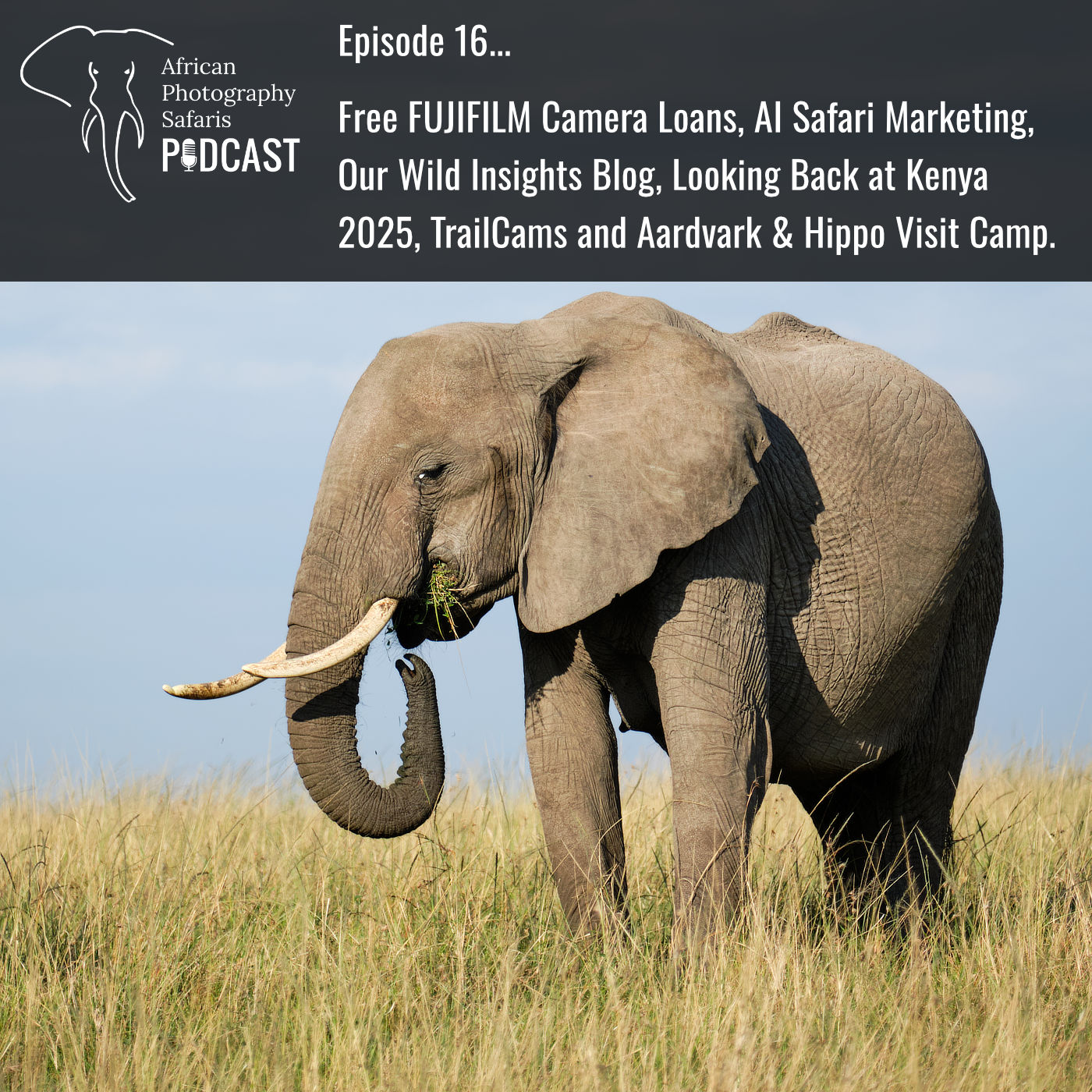
We chatted about using AI in this way in episode 16 of our African Photography Safaris podcast.


Leave a Reply